
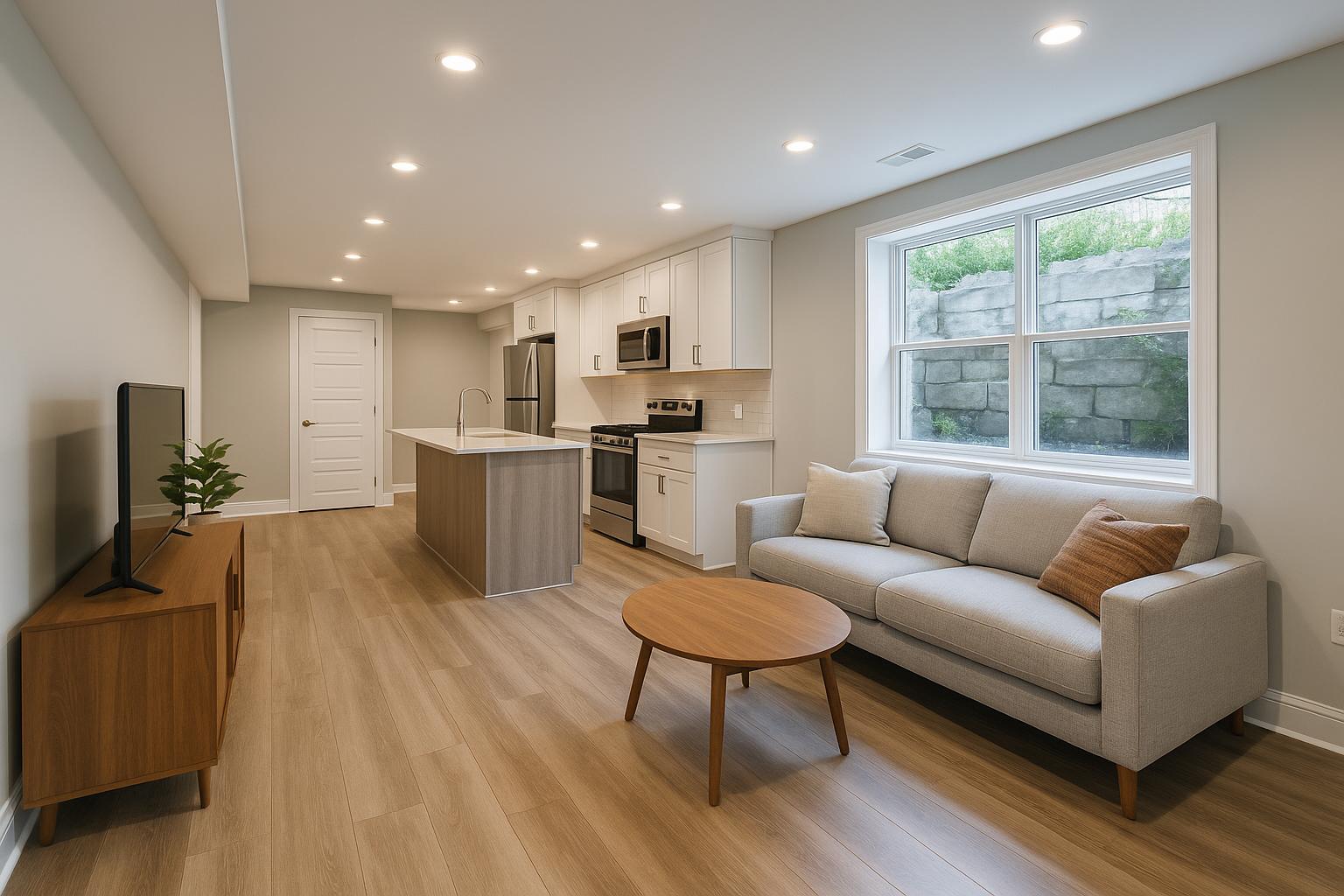
Why San Diego Homeowners Are Looking Below Their Feet for Extra Income
With San Diego's housing market consistently ranking among the most expensive in the country, homeowners are getting creative about generating income from the space they already own. One of the smartest moves? Converting an underused basement into a fully permitted accessory dwelling unit, commonly known as an ADU.
California has made it significantly easier to build ADUs over the past several years, and San Diego's local regulations have followed suit. If you have a basement that's currently serving as a glorified storage closet, you could be sitting on a legitimate income-producing asset. But turning that raw or semi-finished space into a livable, code-compliant rental unit involves more than throwing up some drywall and listing it online.
Here's a practical breakdown of what it takes to convert your San Diego basement into a rental-ready ADU — from permits to plumbing to the finishing touches that attract quality tenants.
Understanding San Diego's ADU Regulations
Before you start sketching floor plans on a napkin, it's important to understand the rules. California's ADU laws have been updated multiple times in recent years, generally making it easier and cheaper for homeowners to add units to their properties.
Key points to know:
- Size limits: Basement ADUs converted from existing space within your home typically don't face the same square footage caps as detached new-construction ADUs. However, the unit must meet minimum habitable space requirements.
- Parking: In many cases, no additional parking is required for ADUs in San Diego, especially if your property is near public transit.
- Setbacks: Since you're converting existing interior space rather than building an addition, setback requirements are generally not an issue.
- Permits: You absolutely need permits. An unpermitted unit can result in fines, liability issues, and problems when you eventually sell your home. The City of San Diego's Development Services Department handles ADU permits, and processing times have improved thanks to state-mandated timelines.
Working with a remodeling team that understands local permitting can save you months of back-and-forth with the city. We've navigated the process for homeowners across San Diego, La Mesa, El Cajon, and surrounding communities, and knowing what inspectors look for makes a real difference.
What Makes a Basement Livable (and Legal)
A legal ADU isn't just a room with a bed in it. San Diego building codes require specific features for any space classified as a dwelling unit. Here's what your basement conversion will need:
Separate Entrance
Your ADU needs its own dedicated entrance. For basements, this often means adding an exterior door with a safe, code-compliant stairway or walkout access. If your home sits on a slope — which is common in neighborhoods throughout San Diego — you may already have a natural entry point on the lower level.
Kitchen Facilities
A legal dwelling unit requires a kitchen or kitchenette with a sink, cooking appliance, and refrigerator space. This means running water supply lines, drain lines, electrical circuits, and ventilation to an area that probably doesn't have any of those things yet. It's one of the more complex parts of a basement ADU conversion, but it's non-negotiable.
Bathroom
A full bathroom with a toilet, sink, and shower or tub is required. Basement bathrooms often need a sewage ejector pump since the fixtures sit below the main sewer line. This is standard practice and completely reliable when installed correctly.
Egress Windows and Natural Light
Bedrooms must have egress windows that meet specific size requirements for emergency escape. Basements with small or no windows will need window wells or enlarged openings. Beyond code compliance, natural light dramatically improves the feel of a below-grade space and makes it far more attractive to potential renters.
Ceiling Height
Habitable rooms generally need a minimum ceiling height of seven feet. Some older San Diego homes have basements that fall short of this. In certain cases, underpinning or lowering the floor slab can solve the problem, though this adds cost and complexity.
Fire Separation
The ADU must be properly separated from the main dwelling with fire-rated walls and ceilings. This protects both your family and your tenants, and it's a detail that inspectors check carefully.
Design Decisions That Pay Off
Once you've addressed the code requirements, the design choices you make will determine whether your ADU commands top-of-market rent or sits vacant. Here are the upgrades that matter most:
- Luxury vinyl plank flooring: It's waterproof, durable, and looks great. For a below-grade space where moisture can be a concern, it's the smartest flooring choice by a wide margin.
- Open layout: Basements can feel cramped. Minimizing unnecessary walls and using an open kitchen-living area concept makes the space feel significantly larger.
- In-unit laundry: Even a compact stackable washer and dryer adds tremendous appeal. Tenants in San Diego's rental market will pay a premium for this convenience.
- Quality lighting: Recessed LED lighting on dimmer switches transforms a basement from cave-like to inviting. Layer your lighting with task lights in the kitchen and bathroom for a polished look.
- Sound insulation: Adding insulation between the ADU ceiling and the main floor above reduces noise transfer in both directions. Your tenants will appreciate it, and so will your family.
What Does a Basement ADU Conversion Cost in San Diego?
Costs vary widely depending on the condition of your existing basement, the scope of work, and the finishes you choose. That said, most basement ADU conversions in the San Diego area fall somewhere between $80,000 and $180,000. That range accounts for permitting, structural work, plumbing, electrical, HVAC, and finishes.
Compare that to building a detached ADU from scratch — which often runs $150,000 to $300,000 or more — and the basement conversion starts looking like a serious bargain. You're working within an existing structure, which eliminates foundation and framing costs in most cases.
The rental income potential is compelling too. A well-finished one-bedroom ADU in neighborhoods across San Diego, Chula Vista, La Mesa, or Lemon Grove can realistically command $1,500 to $2,500 per month depending on size, location, and finishes. At those numbers, many homeowners see a full return on their investment within five to seven years.
Choosing the Right Team for the Job
A basement ADU conversion touches every trade — framing, plumbing, electrical, HVAC, flooring, cabinetry, and more. Coordinating all of those moving parts is where projects either run smoothly or fall apart. You want a remodeling contractor who has handled these conversions before and understands both the construction and the permitting side.
At San Diego Basement Pros, we manage the entire process from initial design through final city inspection. We work with homeowners in San Diego, National City, El Cajon, and throughout the region to turn neglected basements into spaces that are genuinely worth living in — whether that's for a tenant, a family member, or a home office that finally feels like a real room.
Is a Basement ADU Right for You?
Not every basement is a good candidate for an ADU conversion. Ceiling height, moisture issues, access points, and your home's existing systems all play a role. The best first step is an honest assessment of your space by someone who knows what to look for.
If you've been thinking about making your basement work harder for you, we're happy to walk through your space and give you a straightforward evaluation — no pressure, no jargon, just a clear picture of what's possible and what it would take to get there.